









Planetary Science Directorate

Boulder, Colorado

IDA Image Moon Formation Simulation astrophysics image Saturn Image
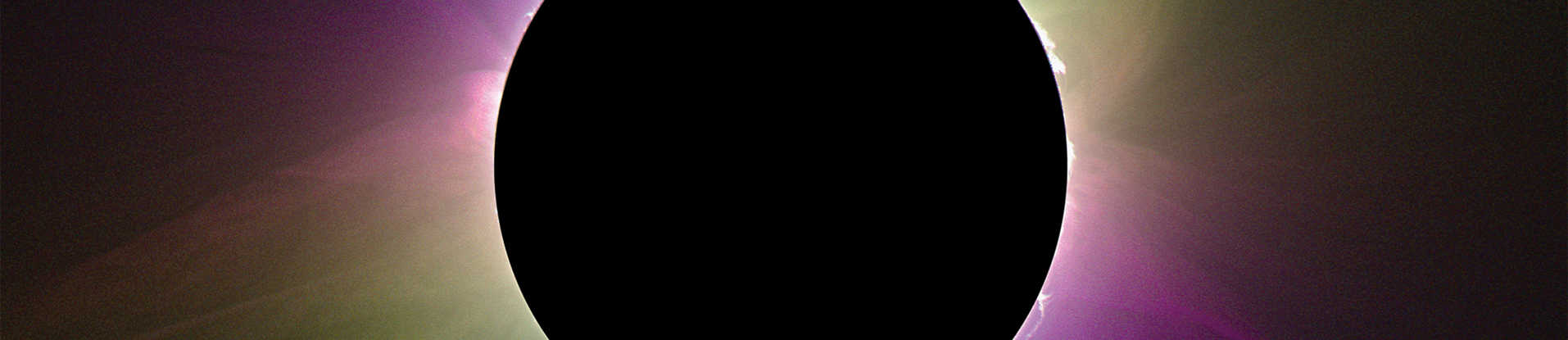
SOHO Image

The Planetary Science Directorate conducts basic observational, modeling and theoretical research in a wide range of solar system and astrophysical topics, and it is active in the scientific and instrumentation and operational components of several space missions. The Boulder office also hosts a steady stream of international visiting scientists and is involved in organizing workshops and meetings with focused scientific topics. Research is funded primarily by NASA and the National Science Foundation.

Mr. William C. Gibson, Acting Executive Director
Dr. Joel Parker, Assistant Executive Director
Dr. Robert E. Grimm, Director, Department of Space Studies
Mr. John Andrews, Director, Department of Space operations
 

Technical Strengths in the Section Include:

  • Radiative transfer modeling of the atmosphere and clouds of Venus; modeling of volcanic processes and the surface history of Venus; near-infrared telescopic studies of the clouds of Venus; evolutionary climate modeling; experimental studies of brines and evaporites on Mars
    Dr. Mark Bullock

  • Formation of the Moon and Earth; hydrocode simulations of impacts between planet-sized objects; theoretical and numerical dynamical models; planet formation; formation and dynamics of satellite and ring systems
    Dr. Robin Canup

  • Asteroids and small bodies; cratering of planets and satellites; spectrophotometry of planetary surfaces; planetary imaging by spacecraft; planet Mercury; impact hazard and role of impacts in origin and destiny of life; interdisciplinary communication and public outreach
    Dr. Clark R. Chapman

  • Solar physics; solar magnetic field modeling techniques; "fluxon relaxation"; relationship between solar surface magnetic field and the million degree corona; instrument development
    Dr. Craig DeForest

  • Collisional and dynamical evolution of asteroids, comets, and interplanetary dust; regolith emplacement and redistribution on asteroids; formation of asteroid satellites
    Dr. Dan Durda

  • Solar system dynamics; planetary rings; dynamics of comets and asteroids; impact history of the solar system; origin of planetary satellites; planetary imaging by spacecraft
    Dr. Luke Dones

  • Solar physics; dynamics of the solar atmosphere; acceleration of the solar wind; ultraviolet spectroscopy and instrument development
    Dr. Donald Hassler

  • Large-scale numerical simulations; celestial mechanics; the structure of the Kuiper Belt; formation of comets; solar system formation and evolution
    Dr. Harold F. Levison

  • Detection of asteroid satellites; Hubble Space Telescope imaging of asteroids
    Dr. William J. Merline

  • Kuiper Belt; Centaurs; Pluto; Luna; massive stars; extragalactic stellar clusters; data reduction and analysis techniques
    Dr. Joel Parker

  • Hydrogeology and tectonics of Mars; theory and instrument development for geophysical detection of groundwater on Mars; thermal histories and hydrogeology of meteorite parent bodies; tectonics of Venus; interdisciplinary geophysical surveying.
    Dr. Robert E. Grimm

  • Interacting binary stars: modeling, observation, and analysis; hydrodynamics and radiative transfer modeling of circumstellar matter; binary stars in clusters; data reduction and analysis techniques; distributed computing
    Dr. Dirk Terrell

  • Formation of planetary systems; disk-planet interactions; theoretical dynamics; planetary obliquities; planetesimals; formation of the Moon
    Dr. William Ward

  • Albedo maps and volatile transport models for Pluto; distribution of haze and albedo maps for Triton; NASA applied information systems; navigational tools for NASA mission data sets
    Dr. Eliot Young

For more information about the SwRI Space Studies Department visit: www.boulder.swri.edu.

Division Publications

Space Science Department

Space Science and Engineering Division
SwRI Technical Divisions SwRI Home

March 31, 2009